
title icon
Karytron

ELECTRICAL SAFETY AUDIT

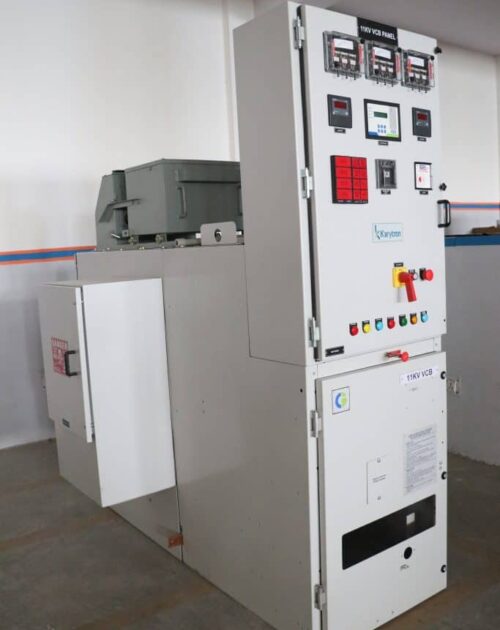
HT-Panel

What is an Electrical Safety Audit?

Definition: Electrical Safety Audit is a detailed physical examination and technical assessment of electrical installation, its wiring, protection systems and practices followed thereof on the site by adhering to applicable Indian Standards and CEA rules and International Standards. Objective: To review the safety and operational integrity of the entire electrical systems at plant and safety of the workers and to ensure the non-stop production. Why electrical safety audit is performed?: To prevent imminent equipment failure, negligence of workers and wrong installation before and accident or premature breakdown occurrence.

Differentiation of Inspection and audit:

Inspection: It is the routine or visually carried out check of equipment against operational characteristics.

Audit: Is an exhaustive and systematic evaluation composed of actual check on the equipment using thermal imaging camera, checking documents, conducting interviews and testing. Comparison with different engineering standards applicable at National as well as International level.

Why and Importance of Detecting Electrical Hazard?.

Pre-mature detection saves huge costly affair such as electrical fire , arc flash, machine burnouts, shutdown and litigation from Govt.
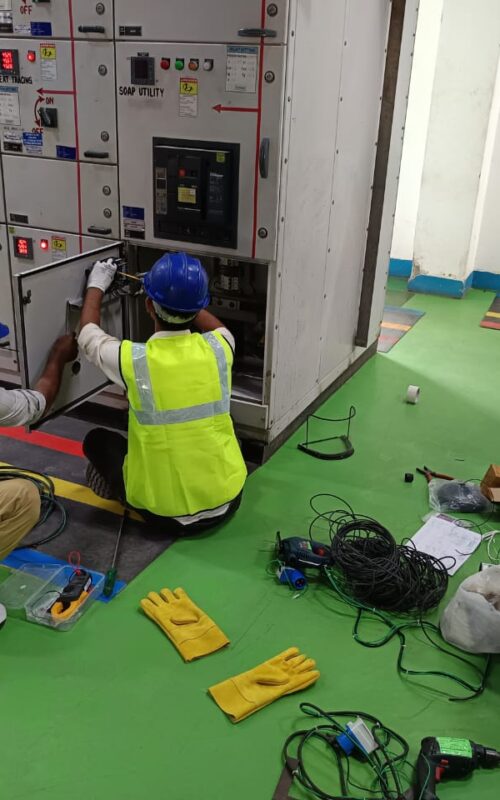
Why is an Electrical Safety Audit Important?

Avoid Electrical Accidents; Detects shock,arc flash & electro- static hazards before they damage personnel.

Eliminate Fire; Hazards; Faulty protecting devices, over-heating cables and over-loaded feeders, a leading cause of fires, detected and avoided.

Protect your staff; Identifies deficiency inPPE, LOTO procedures, safe work culture for your technicians and machine operators.

Ensure equipment Reliability; main transformer,switchgear,motors & other equipment is properly loaded and is well within ratings.

Ensure legal ; Compliance ; Adheres to stringent norms laid down by Central Electricity Authority (CEA), Indian Electricity Rules and state factory inspectors. Reduce Downtime;

Cuts out costly plant trips and transformer failures,while improving stability stands. Improve efficiency; power factor and energy saving bya nalysis of load imbalancesandinefficient capacitor banks.

Reduce Costs; Helps in a proactive planning of Electrical Preventive Maintenance (EPM) to a planned program and reduces cost on repairs.

16
title icon

Electrical Risks Identified During an Audit

Open /Loose Electrical connections and terminations ( High contact resistance).

Overloaded circuits and feed wires, causing high load currents far above the cable capacity rating and accelerates degradation of insulation.

Damaged and faulty wiring such as worn out, cracked or stressed electrical cable insulators posing risks of short circuit or electrocution.

Failure to an earthing system as measured by high pit resistance, break in earth continuity conductors or lack of continuity in earthing of all metallic non conductive parts in an enclosure/installation, and incorrect earthing methodology.

Inappropriate Installation of electrical panels where there is entry of dust/moisture, or lack of proper shroud or sealed panel entry for cables; or lack of adequate clearances.

Detection of hotspots or thermal anomalies in bus bars and switchgear contacts using thermal imaging, as well as cable joints etc.

Short circuit and fire hazards associated with wrongly rated protection switches (FUSES, MCBS, MCUBS, ACB, VCB).

Electrical shock, flash hazard with wrong polarity to the socket, missing ELCB or RCCB, or having an exposed live conductor.

Wrong electrical cabling routing like using cable trays that provide pinch point and also have inability to withstand external damages to the cables and also high surrounding heat.

Transformer and Sub-Station problems, like being overloaded, wrong settings for protection relays or low insulation resistance and/or aged/contaminated insulating oil in transformer.

ES (Electro-Static) and lightning risk with insufficient or no static grounding in flammable zones and lack of full coverage of lightning protection system. Gaps in SLD and missing test certificates as well as lacking of valid work permits.

fault levle calculations
title icon

Our Electrical Safety Audit Process

1. Pre-audit and Site visit (Teamwork): Issues of Pre-audit questioner for collection of initial data and end-to-end physical inspection of the facility
2. Leadership meeting: Detailed discussion and alignment meeting with Plant Head, lead Electrical Engineers and Safety Officer
3. Field survey and monitoring (Goals): Implementation of detailed physical survey and monitoring of safety aspect and field data collection
4. Visual Inspection & Testing: detailed scrutiny of Electrical Panel boards, Switchgear, Cabling, Earthing pit and socket polarity checking
5. Thermal Scanning & Load Analyzing: Thermographic analysis on the main cables/feeders (as per NETA / NFPA 70) and measurement of transformer loading using Power Analyzers
6. Earthing & insulation resistance review: Testing of earth pit resistance register/logs and inspection and testing of electrical cables, protection relay logs
7. Documentation & Compliance review: Review of the statutory compliance ( CEA/IE rules), SLDs, Layout drawings, vendor capabilities
8. Risk assessment and Gap analysis (Analysis): Classification of hazards (Shock, Fire, Explosion, Overload), cost evaluation, and draft action plan map
9. Management briefing: Exit presentation along with immediate observed safety issues and preliminary risk findings at the end of field works
10. Detailed audit report & Recommendations (Results): Delivery of final audit report with gap assessment, photographs and action plans priorities

title icon

What Does Our Electrical Safety Audit Include?

HT & LT Panel Inspection – Panel/Busbar/Switchgear visual, functional, thermographic inspections.

Transformer Inspection – Loading analysis via Power Analyzer, review of Transformer oil test report and bushing thermal images.

Earthing System Evaluation – Comprehensive review of earthing pits/grid drawings and earthing test record as per IS 3043.

Lightning Protection Review – assessment of need, adequacy, installation, and earthing/grounding maintenance for LPS.

Thermal Imaging/ Thermography – Infrared scan of complete Electrical systems as per NETA Standard / NFPA 70 guideline.

Cable Condition & Insulation Assessment – Cable inspection,Termination checking, sampling insulation resistance testing. C

ircuit Breaker & Protection System Review – check of VCB,ACB,ELCB,MCB, MCCB,master switch, protection relays.

Static Electricity Hazard Assessment – Electro-static generation, evaluation and controls in the process area.

Hazardous Area & Flameproof Equipment Audit – checks on compliance to hazardous area classification and the choice and use of flameproof gear.

Overload & Current Carrying Capacity Analysis – load measurements directly as against the designer limit for conductors.

Socket Polarity & Utility Testing – random sockets in the admin and operational buildings forpolarity and grounding check.

Metering & Calibration Audit –check of installed meters for its requirement, functionalityand calibration period status.

Work Permit & LOTO Audit –Check of interlocks, LOTO proceduresand all Work Permit document.

Vendor Competency & Qualification Review – audit on the process of selectionand qualification of third parties dealing with Electrical erection/ Maintenance.

Safety Policy & Incident Investigation Review – company safety policy review, committee functions, Risk Register,Near Miss Log, incident root cause analysis procedure.

Electrical Preventive Maintenance (EPM) Review – plant history card inspection, routine testing record and checklists review.

Electrical Documentation Review – availability ofSLDs,earthing layout drawings,Calibration Certificate,OEM manualsand more.

title icon

Industries We Serve

Manufacturing:Heavy-duty equipment in an industry sector- includesheavy and light engineering manufacturing plants. Automobile:All form of production environments from automotive assembly plants through stamping to component production centers. Cement: High voltage units in dust laden environment with a high load requirement in cement industries.

Chemical:hazardous area process environments including static and flameproof plant areas Chemical: Plants with hazarduous environment- requires static and flamproof assessment.

Pharmaceutical: Active pharma ingredient plants(API), formulations units and clean room production areas. Textile: Areas with a very high ambient fire (Lint) risk, need to use a very stringent form of protection. Food Processing:Continuous and in the presence of moisture product plants. Hospitals:critical life protection systems need reliable and safer supply of Electricity.

Hotels: All building power needs in a safe guest system, kitchen power distribution system & central HVAC Plants Safety in Hotels.

Commercial Buildings: Office building high rise and multi unit tenancy spaces and complexes. IT Parks &Data Centers: Critical high-density power distribution in mission-critical systems with high availability with the emphasis of temperature precision. Warehouses: Logistics and distribution facilities lighting distributions and panel boarding and product handling electrical components supply.

Power Plants:Electrical installations on power Generation facilities and high voltage substation(GSS) equipment with T&D networks. Educational Institutions: Campus power distributions system-safety in colleges and Universities of education.

fault levle calculations
title icon

Standards & Compliance We Follow

Audits by Karytron

The audit is performed as per various statutory codes, national standards and international engineering standards, which are the basis for audit. These standards are.
IS 732: Code of practice for electrical wiring installations.
IS 3043: Code of practice for earthing.
IS 17512 / ISO 14971 / IEC 6233: Safety standards, medical electrical safety, risk management approach.
CEA Regulations: Mandatory measures in relation to electric supply and safety.
Indian Electricity Rules: High/Low voltage installations are as per statutory rules.
NETA Standards / NFPA 70 Guidelines: Recommended procedures for electrical equipment maintenance and for infrared thermography.
Factory Safety Guidelines & Electrical Inspectorate Requirements: Factory rule compliances for the state involved.

title icon

Why Choose Karytron?

Expert Electrical Engineers: Audit performed by expert power system and safety experts.

High-End testing & measuring equipment: Use of thermal imagers with highest accuracy and sensitivity, calibrated test kits and power analyzers.

Step-by-step methodology: structured 5-step audit execution with systematic preparation, physical inspection, analysis and corrective support in execution.

Cost analysis &Gap analysis: Not just faults are identified but we present gap analyses along with most cost effective recommendations.

Wide areas to inspect: all the ways from HV/LV Main systems to socket polarity and vendor capability audits are included.

End to end documentation: easy submission of the field presentation, draft and final reports.

fault levle calculations
title icon

Deliverables After Audit

After our audit engagement: Clients Get a Summary Report: An immediate on-site presentation of findings of field work to close out. A full narrative report: Safety Audit Report in a very detailed technical format (findings, standards evaluation, recommendations prioritizing risks). A list thermal scan and image reports.

( Infrared thermography that visually show exact hotspot readings for each panel, cables, and feeder).

A report on the transformer loading, feeders current readings as compared to the current-carrying-capacity of our cables. Electrical Load Analysis Report. A listing of the non-conformities found; categorized (statutory, shock hazards, fire hazards, electrostatic hazards, etc.) Non-Conformance & Risk Assessment.

A clear action plan to address and manage our findings Corrective Action Plan.

Frequently Asked Questions

An electrical safety audit is an onsite inspection and documentary evaluation of a plant’s entire electrical installation to identify risks, prevent accidents, and verify compliance with standards like IS 3043, IS 732, and CEA rules.

It is required to identify hidden hazards such as thermal hotspots, cable overloading, and earthing faults before they cause electrical fires, equipment failure, or human injury. It is also mandatory for statutory compliance under Indian Electricity Rules.

It should be conducted by qualified, independent electrical safety engineers equipped with specialized tools like power analyzers and calibrated thermal imagers.

Most industrial guidelines and statutory authorities recommend conducting a full electrical safety audit annually, or whenever significant capacity expansions and equipment modifications occur.

Our audit follows Indian Standards (IS 732, IS 3043, IS 17512), Central Electricity Authority (CEA) rules, Indian Electricity Rules, ISO 14971, IEC 6233, and NETA / NFPA 70 guidelines for thermography.

It includes physical inspections, switchgear reviews, transformer loading via power analyzer, thermography of main feeders, earthing pit reviews, insulation resistance checks, socket polarity checks, and procedure reviews (LOTO/work permits).

All power-intensive and hazardous process facilities—including manufacturing, chemicals, pharmaceuticals, textiles, cement, commercial complexes, data centers, and hospitals—require regular safety audits.

Yes, detailed thermal imaging of main cables, feeders, switchgear, and panels as per NETA / NFPA 70 guidelines is a core part of the audit.

Electrical testing focuses strictly on measuring parameters of specific components (e.g., Megger tests, earth resistance tests), whereas a safety audit evaluates the total system, including testing, statutory compliance, safety policies, operational procedures, and risk management.

You should keep single-line diagrams (SLD), earthing layouts, recent calibration certificates, past test reports, transformer oil test records, and historical maintenance logs ready.

Yes, our methodology explicitly audits vendor selection criteria, personnel competencies, Lockout/Tagout (LOTO) protocols, and work permit system execution.

The field audit duration depends on plant size, connected load, and the number of panels, typically taking between 2 to 5 days, followed by report generation and management presentation.

The field audit duration depends on plant size, connected load, and the number of panels, typically taking between 2 to 5 days, followed by report generation and management presentation.

Call Now Button